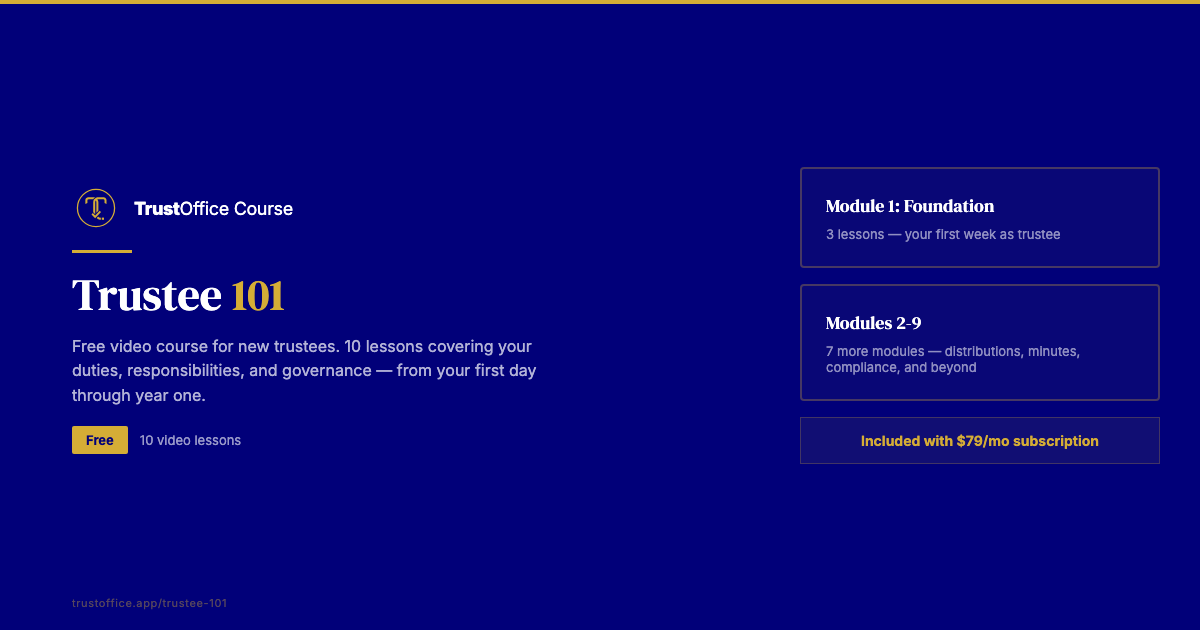
Join a Free Trust Administrator Course to Develop Your Skills This Day
Enrolling in a complimentary trustee program can greatly enhance one's make a move professional skills. It provides crucial information on trustee responsibilities and money management. Students can learn at their own speed while connecting with industry professionals. This opportunity not only deepens knowledge but also opens doors for professional growth. However, many may wonder what specific skills they can expect to acquire and how these can be utilized in practical situations.

Important Expertise You'll Learn From a Free Trustee Course
A no-cost trustee course provides participants with essential skills crucial for sound management and oversight. The curriculum covers key areas such as financial education, enabling trustees to comprehend budgets, financial statements, and investment strategies. Participants also develop expertise into legal responsibilities, guaranteeing compliance with laws and ethical standards.
Additionally, the course improves strategic development abilities, furnishing individuals to contribute in long-range organizational aims. Effective communication competencies are yet another significant feature, permitting directors to convey ideas in a clear manner and work with stakeholders in an effective way.
In addition, collaborative and managerial skills are highlighted, fostering collaboration among board members and promoting a productive deliberation process. Conflict resolution strategies are also taught, readying participants to handle disagreements professionally.
In the end, these competencies not only prepare individuals for their positions as trustees but also boost their overall management abilities, making them important contributors to any organization.
Primary Motives to Register for a Free Trustee Training for Job Progression
While numerous experts seek ways to enhance their careers, enrolling in a complimentary trustee course offers distinctive benefits that can significantly enhance one's career progression. First, these programs deliver crucial information about trustee obligations, strengthening a professional's reputation in their industry. Understanding the legal and ethical obligations of a trustee can create new career opportunities and roles.
Additionally, networking with industry professionals and colleagues during these courses can result in strong connections that may support career progression. Participants also acquire hands-on expertise in financial management and governance, which are in great demand in multiple sectors. Finally, the flexibility of digital learning permits individuals to study at their own speed, making it simpler to manage education with existing work responsibilities. Overall, enrolling in a free trustee course not only enriches knowledge but can also significantly improve professional prospects and career expansion.
Uncovering the Superior Unpaid Trustee Program for You
How can one pinpoint the most fitting free trustee course among the abundance of alternatives accessible? First, one should consider their exact necessities and work objectives, identifying what abilities or information voids they want to resolve. Next, investigating curriculum and design is vital; a detailed curriculum plan can demonstrate whether the course will meet one's expectations.
Furthermore, copyrightining the qualifications of the instructors can offer understanding into the quality of instruction provided. Reviews and testimonials from previous students are invaluable, as they demonstrate actual results and experiences.
Finally, reviewing the versatility of the course design—whether it is self-paced or organized—can help in selecting a program that fits one's way of living. By considering these factors, individuals can make a more informed decision, ensuring the selected program aligns with their professional aspirations and learning preferences.
Powerful Solutions for Maximizing Your Trustee Course Education
To maximize the benefits of a trustee course, a planned approach is needed. Participants must start by defining clear goals and identifying the particular skills or knowledge they want to gain. Active engagement in the learning process is vital; this involves joining discussions, asking questions, and working together with peers. Consistently reviewing course content supports better understanding and retention of key concepts.
Furthermore, it is helpful to take notes and compile outlines of key subjects, facilitating easier revision afterward. Networking with peer attendees can provide valuable insights and assistance, fostering a community atmosphere. Leveraging additional materials, such as suggested texts or web-based discussions, can enhance comprehension and application of acquired knowledge.
In conclusion, utilizing the information in real-world contexts, whether through real-world applications or simulations, reinforces understanding and increases confidence in trustee responsibilities. By implementing these strategies, individuals can fully take advantage of their trustee course experience for career and personal advancement.
Practical copyrightples of Trustee Abilities in Governance
Trustee competencies are vital in successful organizational oversight, enabling individuals to traverse complex organizational landscapes. These skills are critical for fostering transparency, accountability, and ethical decision-making within various entities, including nonprofits, educational institutions, and corporate boards. Trustees outfitted with strong analytical abilities can evaluate organizational results, fiscal well-being, and compliance with regulations, thereby enhancing comprehensive organizational leadership.
Moreover, strong interpersonal competencies enable trustees to work with stakeholders, ensuring that multiple viewpoints are taken into account in governance decisions. Dispute management skills are equally important, since they help copyright harmony and cooperation among board members and other stakeholders. Additionally, forward-thinking planning abilities allow trustees to coordinate organizational goals with wider purposes, guaranteeing sustainability and growth. In this way, the use of trustee skills in governance reinforces institutional frameworks but also cultivates trust and integrity within communities and organizations.
Popular Inquiries That Are Asked Often
Do No-cost Trustee Courses Get Recognition from Industry Groups?
Complimentary trustee training may not consistently be accepted by industry associations. Approval typically is based on the educational provider and the specific accrediting body, so students should verify credentials before enrolling in any offering.
What Length of time Does a Common Free Trustee Course Require to Complete?
A regular free trustee offering generally takes between four to eight weeks to complete. Course span may shift depending on the provider, subject depth, and attendee engagement, allowing for freedom in learning schedules.
Will I Be Awarded a Certificate After Completing a Free Trustee Course?
Yes, individuals can typically obtain a certificate after finishing a free fiduciary course. However, certificate options may differ by organization, so participants should confirm the specific details with the program provider before registering.
Are there Limits to How Much Fiduciary Classes I'm Able to Enroll In?
Typically, there is no limit to how many trustee courses a person can participate in. Participants are recommended to undertake multiple courses for expanding their competencies in trustee responsibilities and governance.
What Requirements Do You Require to Participate in a Free Trustee Course?
To participate in a no-cost trustee course, attendees typically need a elementary grasp of financial principles, commitment to the length of study, and sometimes earlier involvement in trustee duties. Exact qualifications may change by institution.